May 18, 2026
Hayden B. Rowan
Master Challenge Devices, Process Challenge Devices, Sterility Assurance Level, Biological Indicators, Worst-Case Validation, Ethylene Oxide (EO) Sterilization, Gamma Radiation Sterilization, Moist Heat Sterilization
EO Sterilization Validation Support, Radiation Sterilization Validation Support, Biological Indicator Population Verification, Fractional Cycle Validation Studies, Master Challenge Device Evaluation, Process Challenge Device Development Assistance
Sterilization validation is a critical process for ensuring that medical devices are consistently produced in a sterile state and meet stringent regulatory expectations. Among the most effective tools used during these validation studies are Master Challenge Devices (MCDs) and Process Challenge Devices (PCDs).
Although these terms are often used together, it is important to distinguish their roles early in the validation strategy.
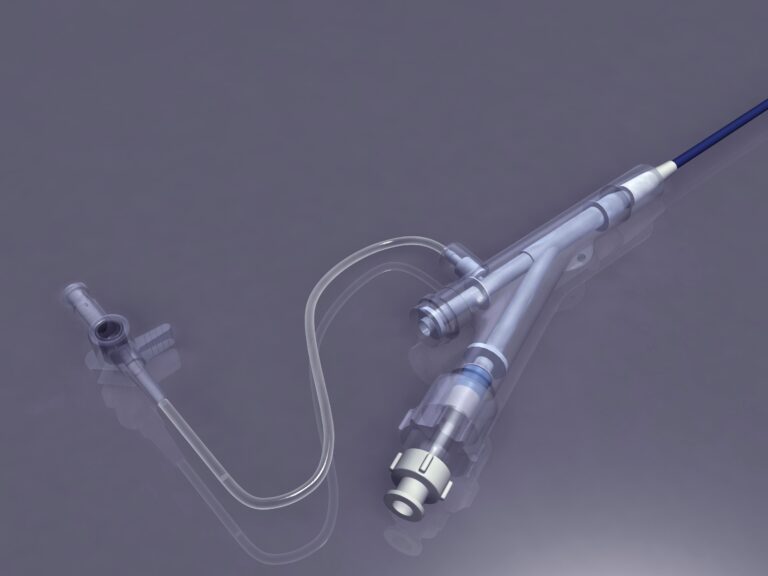
An MCD is a real, marketed medical device intended for patient use that represents a worst-case configuration within a defined product family. Depending on the study objective, a device family may have different MCDs. For example, separate worst-case representatives for bioburden assessment, sterilization validation, and sterilant aeration performance. In practice, MCDs are most commonly used for bioburden evaluation and sterilant aeration studies, where actual product characteristics must be directly assessed.
For the specific purpose of sterilization process validation, a different process challenge device (PCD) may be utilized. This is a specifically designed device that represents a designated family or multiple families of marketed devices as a worst-case sterilization challenge. Depending on the validation strategy, the PCD may consist of an actual Master Challenge Device (MCD), a modified version on an MCD, or a completely separate, non-marketed device specifically engineered to provide a consistent and reproducible sterilization challenge.
Together, MCDs and PCDs allow manufacturers to systematically evaluate product variability while ensuring that sterilization processes are validated against the most challenging and relevant conditions.
What Is a Master Challenge Device?
A Master Challenge Device (MCD) is a specially designed or selected test article used during sterilization validation studies to represent the worst-case scenario within a product family or load configuration.
The fundamental principle behind an MCD is straightforward: if the sterilization process can effectively sterilize the most challenging configuration, it will also be capable of sterilizing all other products that are equivalent to or less difficult to process.
MCDs are commonly used across a range of sterilization modalities, including:
In many cases, MCDs incorporate biological indicators (BIs), which are strategically placed in locations considered most difficult for the sterilant to reach.
Why MCDs Are Important in Sterilization Validation
The primary objective of sterilization validation is to demonstrate that a process can consistently achieve a sterility assurance level (SAL) of 10⁻⁶ – indicating less than a one-in-a-million probability of a viable microorganism surviving the process.
Master Challenge Devices support this objective by:
Without a properly designed challenge device, it becomes significantly more difficult to demonstrate that a sterilization process is sufficiently robust and reliable.
Designing a Process Challenge Device
Developing an effective PCD requires careful evaluation of a product’s physical characteristics, materials, and packaging configuration. The goal is to identify features that may inhibit the rate of sterilant penetration into the device or pallet loading scheme.
Key factors considered during MCD design include:
Product Geometry
Devices with long lumens, narrow channels, or complex internal structures can restrict sterilant flow and create challenging conditions.
Packaging Configuration
Multiple packaging layers or dense product arrangements may act as barriers to sterilant penetration.
Material Composition
Certain materials may absorb or interact with sterilants, potentially affecting sterilization efficacy.
Worst-Case Locations
Biological indicators are placed in areas where sterilization conditions are expected to be least effective.
By combining these considerations, manufacturers can construct an MCD that accurately represents the most difficult sterilization conditions within a given product family.
MCDs vs. Process Challenge Devices (PCDs)
While the terms Master Challenge Device (MCD) and Process Challenge Device (PCD) are often used together, they serve distinct, yet complementary, roles in validation studies.
Master Challenge Device (MCD)
Represents the worst-case product or configuration within a product family and serves as the primary challenge during validation.
Process Challenge Device (PCD)
Represents the sterilization challenge associated with a specific product or packaging configuration.
During validation, multiple PCDs may be evaluated to identify the most challenging configuration. Once identified, that configuration may be designated as the MCD for ongoing validation and routine monitoring.
Use of MCDs During Validation Studies
In sterilization validation studies, MCDs are placed in locations within the sterilization load that are expected to experience the least favorable conditions.
For example, during an ethylene oxide (EO) validation:
Successful inactivation of these biological indicators demonstrates that the sterilization cycle is capable of achieving the required sterility assurance level.
Regulatory Expectations
Regulatory bodies require manufacturers to provide clear justification for the selection and design of challenge devices as part of their sterilization validation documentation.
Key standards that guide these expectations include:
These standards emphasize the importance of worst-case challenge devices and scientifically justified validation approaches. Properly designed MCDs provide strong evidence that a sterilization process is effective across a defined product family.
Supporting Sterilization Validation with Reliable Testing
Successful sterilization validation depends on accurate microbiological testing and well-designed studies. From biological indicator evaluation to validation support, laboratory partners play a critical role in helping manufacturers demonstrate process effectiveness.
At LexaMed, microbiological testing services support manufacturers throughout sterilization validation studies – ensuring results are accurate, compliant, and delivered with industry-leading turnaround times.
Copyright @ 2025 LexaMed. All Rights Reserved